Fence maintenance
How to Maintain a Wood Fence in North Georgia
By Fleming Fencing ·
A useful maintenance routine starts with knowing what changed. A gate that used to close easily, a newly leaning section, or boards that have come loose deserve attention before you focus on the fence’s color. Use this checklist for a wood privacy or board fence in Dawsonville, Cumming, Dahlonega, and nearby North Georgia.
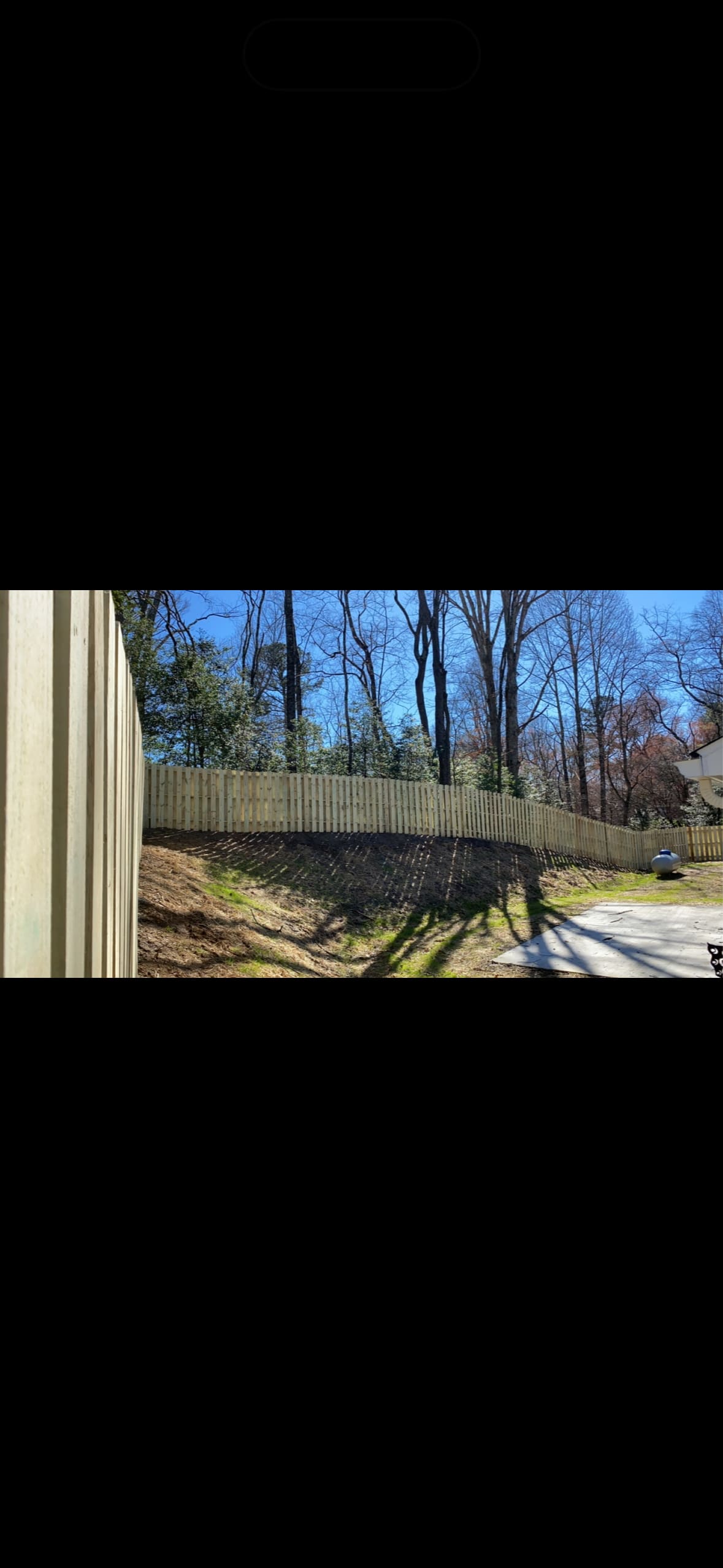
Start with a walk along the fence
Look along both sides where you have access, beginning at one gate and working around the property. Take a wide photo of each questionable section, then a closer photo of the connection or post. Comparing photos later is more useful than trying to remember whether a lean has grown.
Look without forcing a loose fence or leaning on a damaged section. If it is unstable, keep people and animals away and arrange an assessment. A fence used to contain pets or protect a pool needs prompt attention when its barrier or latch stops working.
- Posts: new leaning, visible deterioration near ground level, or gaps around the base.
- Boards and rails: loose connections, broken pieces, and sharp or projecting fasteners.
- Gates: dragging, loose hinges, or a latch that no longer engages reliably.
- Surroundings: branches resting on the fence, piled debris, or a changed drainage path.
Keep the fence line accessible
Clear loose leaves and yard debris from the boards so you can see their condition. Keep stacked materials and heavy objects from resting against the fence. Trim plants enough to preserve inspection access, without disturbing roots or removing anything beyond your property.
Notice whether sprinklers repeatedly hit the same section or runoff collects at one post. Record the pattern for the repair visit. Do not dig around post foundations or change drainage simply to hide a problem; the cause should be understood before the next repair is chosen.
Plan cleaning and finishing around the actual materials
Identify the wood and any existing coating before choosing a cleaner or finish. Use a product labeled for that surface, follow its instructions, and test an inconspicuous area. Cleaning should preserve the wood rather than leave gouges or raised fibers.
For finishing, ProWood’s outdoor-lumber guidance emphasizes a clean, dry surface, an appropriate exterior coating, and following the finish manufacturer’s directions. Apply those preparation principles to a fence only with a product intended for fences. Check its moisture, temperature, rain, and drying requirements; a calendar date alone does not prove new lumber is ready.
Keep the product name and application date with your fence records. Recheck the finish according to its label and the fence’s condition instead of assuming every fence needs the same annual treatment.
Check the gate before changing the hardware
Open and close a manual gate normally and note where it catches. A dragging corner can involve hinges, the gate frame, the supporting post, or the ground beneath it. Tightening one part may not correct the underlying issue.
Ask for an assessment when a post moves, a gate is heavy or unstable, or the latch no longer secures the opening. Powered gates need their own manufacturer-specific service process; this wood-fence checklist is not a guide to adjusting motors or safety devices.
Make the next repair easier to estimate
Send your city or ZIP, the fence type, a description of what changed, and photos of the affected section. Note whether pets, access, or a damaged gate make the issue urgent. Approximate section length is helpful when you already know it; avoid taking measurements beside an unstable fence.
Fleming Fencing handles wood-fence repairs and installations across North Georgia. An assessment can separate a localized repair from a larger replacement need. If the rest of the fence is serviceable, the conversation should start with the specific problem and the repair scope.